Founder/CEO

Showing posts with label Hip Hop. Show all posts

Wednesday, November 25, 2020

Master Fard Muhammad, Busta Rhyme's E.L.E. 2 and Generation X Nostalgia


   One of my football teammates at Central State University was a Muslim from Detroit named Brother Jackie. Brother Jackie was a stand-up dude and never dabbled in any un-Islamic activities while many of our teammates were doing everything from running trains on girls, selling weed and getting popped. He was clean, yet he had some spooky ideas about the Nation of Islam, Master Fard Muhammad and their teachings that I couldn't rock with. I remember one autumn afternoon we got into a debate about the divinity of Master Fard Muhammad and I asked Brother Jackie, "Would Fard beat Michael Jordan in a one-on-one game of basketball?" arguing that Jordan was Lord of 'that' World. Brother Jackie looked me square in eye with one of the most sincerest expressions and said, "Yes Brother, I believe that he can." I was done. I was done discussing things like that with Brother Jackie or any adult who shared these kinds of delusional sentiments. I realized that no matter how good some of our people can be about aspects of life, religion was a helluva drug and made some of us blind junkies and even hypocrites. That is dangerous. The seemingly harmless belief that Fard would beat Jordan in a one-on-one game of basketball today can easily become the dangerous belief in a People's Temple leader tomorrow.

   With the 2020 release of Busta Rhymes E.L.E. 2: The Wrath of God, the twenty-two year old follow up of E.L.E [Extinction Level Event], I felt like it brought me right back to that college conversation about Fard with Brother Jackie. Never to disappoint, this highly anticipated  Busta Rhymes project came with its share of high accolades and criticism. One such criticism is the record Master Fard Muhammad, named after the Savior of the Nation of Islam, which features Rick Ross. In Master Fard Muhammad Ross raps:

"Road to riches, fuckin' bitches in my favorite shoes
She thought I had a seizurе, told her April Fools
Fuck a lawsuit, bitch I'm tryna make the nеws
Master Muhammed sold silks goin' door to door
Givin' knowledge to the brothers fed who wanted more
" -Rick Ross [Ricky Rozay]

   Hearing this song and watching the video I thought for sure I would hear a strong rebuke of Rick Ross from Nation of Islam believers for using their Savior's name in vulgar laced lyrics debasing black women. I was sure because just weeks earlier the same believers mounted an exhausting social media campaign against DJ Vlad for simply misquoting Minister Farrakhan, correcting it and not publicly apologizing. The rebuke of this record didn't happen. In fact, the total opposite happened. 
   In a LIVE Streamed Final Call Conversation with Starla Muhammad, Managing Editor of The Final Call Newspaper and Dr. Wesley Muhammad, they invited Busta Rhymes to discuss his E.L.E. 2 project. In that discussion Busta Rhymes acknowledged that he received a blessing from Minister Farrakhan to use a snippet of his lecture for his song The Wrath of God and at about 1 hour 15 minutes into the discussion they delve into to the song Master Fard Muhammad. Disappointingly, Rick Ross' controversial lyrics are never discussed. "Shout out to Ricky Rozay, ya'll repped The God [Fard] in boss way" is all that was said about Fard's representation by Wesley Muhammad. I feel that this interview was a failed opportunity for the hosts to have a substantive discussion with Busta Rhymes about his perspective on lyrical accountability, social influence and representation of our cultural icons. I don't think that a song called Minister Louis Farrakhan featuring a vulgar artist debasing black women would be acceptable for Muslims. So why would a song like that, named after Minister Louis Farrakhan's God [Fard], be acceptable? Instead of asking those difficult yet important questions the Final Call hosts sat there; fawning over the chance to be in the same virtual room with a forty-eight-year-old dungeon dragon. I did not expect them to attack the brother, yet I did anticipate something more in-depth. Given the opportunity, that is exactly what my audience would get from me or any of my Five Percenter colleagues; including questions for Busta Rhymes concerning our Five Percent degrees, Supreme Mathematics and our Nation history to clarify some confusing Five Percenterish Muslim rhetoric scattered throughout E.L.E. 2. 


   Some may wonder, "What does any of this have to do with you? You are not Muslim so why do you even care?" Welp, it is personal. First and foremost I respect Fard and his contribution to black people here in North America. It was he and the Honorable Elijah Muhammad who authored the Supreme Wisdom book which contains a slight variation of the 120 lessons we use within our Five Percent culture. To trivialize, minimize or disrespect that contribution dishonors that legacy. Ironically, when I released the above Atlantis School For Gifted Youngsters animation episode teaching the history of Fard and the Nation of Islam [NOI] I was criticized and even publicly/privately threatened by some registered members of the NOI. It was said that I was disrespectful and misrepresenting "The Savior." Being the first person to ever animate the history of Fard and the NOI, I worked very hard to create this family friendly animation for people to learn this important part of our history. While that negative response from some people was hurtful, it did not discourage me from continuing to create animations that inspire, empower and educate families. In fact, my animation series is now globally available on Roku via the first Five Percenter based streaming platform Seven On Demand. 
   To see the same NOI Muslims praising a song called Master Fard Muhammad featuring an artist name dropping Fard among vulgar lyrics debasing black women infuriated me. I simply did not think the song content and video reflected the actual title. This eclectic process of uniquely naming song titles is part of the Buffalo-bred GXFR [Griselda] brand. Since their ascendancy within Hip Hop there have been numerous artists using elements of their style. From song title selection, music production, rap flow, album artwork, marketing and promotion, merchandising and etc., I can see their influence in this E.L.E. 2 project. This is not a secret, as Busta Rhymes has been featured on a Griselda project and publicly shared his respect for their creative influence in Hip-Hop when he pulled up on their Almighty Tour. 
   

   Over the years many of our people have become very casual about people, places and things that we have traditionally held sacred. The exponential growth of technology and secularization of sacred traditions has contributed to this cavalier attitude. In my article Is Social Media The Digital Turn on, Tune in, Drop out? I discuss how social media and the internet is reshaping our brain architecture, our ability to form meaningful connections and how we explore and attend the real world. Yet even in the midst of this, there are those artists who have remained consistent in treating people, places and things with honor and respect. It brings to mind the record I'm Back by AZ where he also cites Fard among other notables in his opening verse:

"Spirit of Marcus Garvey, Farad Muhammad,
Medgar Evars and Bob Marley, I'm God-Body
The scripture says Allah's inside me, show love
I was hugged by the arms of Gandhi, gave me my strength
You could tell somebody raised me with sense
We all need somethin' to help us through our daily events" -AZ

  While I think the concept, record and video for Master Fard Muhammad could have been more respectfully presented to mainstream audiences, there are records on the E.L.E. 2  project that I definitely enjoyed such as the E.L.E. 2 Intro feat. Rakim, Don't Go feat. Q-Tip and Slow Flow feat. O.D.B.. Sonically, it is not a heavy rotation project. 
 Some have argued, including Busta Rhymes, that simply mentioning Master Fard Muhammad's name is an opportunity to bring many to Islam. My question is, "What 'many' are people talking about, what does that demographic look like?" Rick Ross was added to this song for pop appeal and primarily targets Generation X, my generation. Millennials and Generation Z are not Rick Ross' primary listening audience and they often have no clue who Busta Rhymes is or his discography. The shares, likes and commentary we see about E.L.E. 2 and the features on this project are primarily from Generation X. My generation was heavily exposed to Islam for over a decade during the Golden Era of Hip-Hop and most of us are age 40 and over today. If folks from my generation didn't get this consistent message over twenty years ago, I highly doubt that our folks, en masse, and on the cusp of middle age, are now going to change our trajectory of consciousness because of E.L.E. 2. It is unrealistic at best and delusional at worst. As for Millennials and Generation Z, en masse, combing the internet, buying books about Master Fard Muhammad and joining the NOI in droves? That is also unrealistic at best and delusional at worst. With any trending topic on social media, there will be curiosity on the part of some folks from my generation, Millennials and Generation Z to know what is going on. 
   There were many Hip-Hop projects released in 2020 that are far more impactful than E.L.E. 2. Regardless of that impact, most of these projects are not even trending right now. Even with the inclusion of a Farrakhan soundbite, a Rick Ross featured record named Master Fard Muhammad and free NOI social media hype from attention-seeking Muslims, E.L.E. 2 still falls short of that impact. By December MOST OF THE PEOPLE WHO WERE TYPING IN ALL CAPS ABOUT HOW CLASSIC THIS E.L.E. 2 PROJECT IS will not even be mentioning it... For Generation X, E.L.E. 2 is nostalgia. It is a project of records that DJ's used to be spin in clubs that existed twenty something years ago. Clubs that folks on the cusp of middle age with families rarely go to anymore, with their twenty something year old children.

Peace,
Saladin

Sunday, March 08, 2020

Is Social Media The Digital "Turn on, Tune in, Drop out"?


With the growth of social media and expansion of the Internet many of us are slowly losing our ability to effectively communicate and form meaningful connections with others. Technology is reshaping our brain architecture and how we explore and attend the real world. 

     Many websites today list the average reading time at the top of articles to inform people how much time they can't expect to invest on that site before even reading the article. Prior to development of social media Journalists took more pride in being right and there was a certain degree of integrity that came along with that profession. Nowadays it is about being the first to break a story, regardless if the details are right, in order to monetize web traffic to a website. Even the cycle of news stories have changed. Fifteen years ago National News was a mainstream talking point for at least a week. Nowadays National News has about a 48 hour life unless other information is shared in connection to that information. This is why stories are now shared in segments and you rarely get all of the details when a story breaks. This is not because of lack of information, it is often done in parts to lengthen the life of a story. Sometimes the wrong information is deliberately shared in order to retract it 24-48 hours later, which insures web traffic for another two days. Keep in mind that I am speaking from personal experience, as a writer and as a subject who was catapulted into the spotlight in 2014 when I was cited by as a subject matter expert by the international and national press on Jay-Z's Five Percenter Jewelry.
     Average films today are shorter in runtime, use shorter shots and have more motion and action. That, including the increase in web series on streaming sites and increase commercial time speaks to the changing attention span of audiences. In the early nineties standard Rap songs were comprised of 3 verses and 4 minutes and some seconds long. Now you get maybe two verses for a couple of minutes, as a standard. Dope albums that dropped in the Spring got bumped the entire Summer and into the Autumn. In fact, when we personally declared an album as "Album of the Year" that is because we literally listened to it all year. Nowadays an album may get attention for maybe a week before people begin looking around for the next new release. This is why many Artists today compulsively push out music like it is coming off of a conveyor belt and tour to the point of putting their health at risk; they're trying to keep up with the attention span of their fickle audience. If not, they run the risk of being labeled irrelevant and the next unwilling contestant on the popular game show Cancel Culture. These are just some examples of the changing technological landscape, which has been critical to how we engage one another. 

     All social media formats use a scroll screen model. This enables users to easily scroll through pages without the cumbersome task of reading anything. If reading was not considered cumbersome, social media Apps would not limit the character count to convey a thought. Consider the following character count limits and ideal character count:


Instagram = 2,200 characters max (144 ideal)

Twitter = 280 characters max (71-100, 85 ideal)

Facebook = 63,206 (40-80, 60 ideal)

LinkedIn = 700 (50-100, 75 ideal)

     While some people have learned and are learning to use these limited/ideal character counts to refine concise truncated thought, many others have found themselves becoming less and less equipped to communicate, online and offline. This technological shift coincides with what we are also seeing across the country with the closing and defunding of libraries, the historically low ELA competency levels in primary school students and the moving away from handwriting in exchange for typing. This is vitally important to understand because it affects the social emotional literacy trajectory of our for children and their ability to effectively communicate. In my article 1-36: What is English Lesson No. C1? I discussed why early talking matters and how children in impoverished communities on average hear 30 million fewer words than their privileged counterparts. With the introduction of the Internet and Social Media that is not integrated into our children's daily lives with Apps and Programs to help facilitate social emotional development and literacy, it only widens the disparity between children in impoverished communities from those in privileged communities. I know children in various grade levels who consistently tell me that they just played on a phone, an iPad or laptop when they're asked who when asked, "What did you do this weekend?" 
     In seeing this shift happening over the years I have consistently explored and wrote on this subject. My goal has been and continues to be finding effective ways to use this technology without undermining our ability to function within the real world. This is especially important to me as a Five Percenter who publicly represents our culture. As a Five Percent there are still many of our traditions that are not transferable in this digital domain. For example, in the digital world "all being born to" has been shortened to "abbt" in SMS language or textspeak just like "laugh my ass off" is "LMAO" and "get the f*ck outta here with that bullsh*t" is GTFOHWTB. Abbt does not appropriately convey the concept of drawing things up to their highest nor does textspeak enable us to explain that. Again, while character count limits can be used to develop concise thoughts, I have never been in a cipher where someone used Twitter's 85 ideal character count to build on Today's Mathematics or Today's Degree. The problem is there are folks today who have gotten exposed to KOS [Knowledge of Self] via the Internet and social media who believe that they are actually building with limited characters, comments and SMS language. Even with the LIVE function, social media Apps are not designed to support our traditional form of cultural engagement. As I've consistently mentioned over the years, I utilize these articles, my literature, videos, animation and online classes as routing devices to realtime. Regardless of technology's ability to help facilitate engagement, the best way to build with someone about our culture is to walk with them. The irony is it is "virtually" impossible to learn an entire culture without being actually immersed in it. Ironically, this has become an integral part of American culture and if you were to ask children today what they want to be when they grow up many will say, "A YouTuber!" Their aspirations are not to be a person with a measurable skill set that can contribute to this world, they aspire to be a talking head. It is a digital form of "Turn on, tune in, drop out." 
     There is no way to be a part of this society without interfacing with its technology. So we must explore effective ways to utilize it without it using us. Friday March 6th was National Unplugging Day which is something we need to do more often. This enables us to be more present and better focused on what is happening in realtime. Fasting, Meditation and Mindfulness are also a few techniques that help strengthen our attention span AND minimize attention seeking behavior. Our ability to effectively communicate, and form meaningful connections with others, is ultimately on us. 

Peace,
Saladin

Saturday, November 09, 2019

Hey RZA, We Have Questions About Wu-Tang: An American Saga?


   Since its September 4th, 2019 Hulu release, Wu-Tang: An American Saga series has received mixed reviews from mainstream audiences, critics and citizens of the Five Percent Nation. With an 80% Rotten Tomatoes Rating, Daniel Fiendberg of The Hollywood Reporter writes, "the Wu built a brand based on the street-level drama of their primarily Staten Island upbringing, but filtered through lenses as eclectic as martial arts movies, comic books and 5 Percenter doctrine. The Wu narrative is gritty and grounded, while at the same time verging on urban legend or tall tale." He also goes on to state that, "it captures some of the group's kaleidoscopic perspective and nascent brilliance, but leaves too many of its best ideas half-developed."
   As a Five Percenter, it is no secret that our culture has been very influential in the growth, development and creative expression of the Wu-Tang Clan and its associated group members. In fact, RZA explicitly depicts some of our cultural elements in this series which most mainstream audiences are being exposed to for the first time. While some of those cultural elements were accurately depicted, other elements were not accurately depicted. Because of this, Five Percenters have shared mixed perspectives about how we were and are portrayed in this series. On October 18th I sent RZA an email concerning these perspectives which he has yet to respond to. In part, that email read:

"With the success of your series, and more mainstream exposure of various cultural elements of the Five Percent, I would like to interview you about that process. My readership would be interested in knowing what challenges come along with striving to articulate those cultural elements in a screenplay and presenting them in mainstream media on film? What was the process used to familiarize the actors with the culture of the Five Percent? What creative control do you have in our imagery, use of symbols and objects that express our culture in the series? What was your vision in regards to our depiction and how closely have you manifested that determined idea? These are just a few questions, and others, that many of us have regarding our cultural expression in this series. To my knowledge there is no interview, or interviewer who has allowed you to expound upon these important insights and I would be thankful to have an opportunity to responsibly make this happen!" 


   While some Five Percenters have been quoted on social media as saying, "Bullshit" and "That's why I'm not watching that series.... It's all watered down....", others have stated, "Wow peoples it's TV ya'll. I [am] thankful he [RZA] made Knowledge Born of our existence to the mainstream. I like it!" and "It's not a documentary. lol It's a TV series based on true events. Near Correct." I can understand and appreciate both perspectives. Since its release I have received three times as many inquiries about KOS [Knowledge Of Self] than I normally do. This has enabled me to respond to more questions regarding our culture and direct people to active Five Percenters in the inquirer's region. Creating consistent quality content from a Five Percenter perspective has enabled me to build this type of global platform that people can reference. While there were certain Five Percenter customs that were correctly depicted in this series such as the Just-Ice character questioning Rakeem [RZA] backstage about Today's Mathematics and Rakeem's breakdown of "justice" when questioned by the Gods on the block, there were other instances in this series that depicted us so inaccurate that any Five Percenter would question how much creative control RZA actually had in this series. For example, the emblem that Five Percenter actors wore was not our Universal Flag. As one Five Percenter put it, "reminds me of the Kellogg's Raisin Bran Logo." In the series our 120 Degrees/Lessons were presented as some type of book or manual that one could buy, not the book of life research binder that a student compiles as they responsibly acquire their Degrees/Lessons from their Educator/Enlightener. Although this Wu-Tang: An American Saga series is inspired by actual persons and events, the Five Percenter characterizations, dialogue and incidents that are fictionalized for the purpose of dramatization is still disinformation that can misled people about who we are as a Nation.  


   The release of the Wu-Tang: An American Saga series has definitely caused more people to inquire about the culture of the Five Percent. This same interest has occurred throughout the chronology of Hip Hop depending upon what Five Percenters or Five Percenter influenced Rap Artists were popular. This did not and does not automatically make a person qualified to learn anything. It is only through building actual relationships is that determined. Regardless of a person's interest, the release of a dramatic series or treading topics on social media, we as the Five Percent have been here and will continue to be here living out our culture. If a person is truly willing to seek, they will find us.

Peace,
Saladin 

Saturday, November 03, 2018

PUBLIC STATEMENT: 21 Savage Wearing The Five Percent Nation Universal Flag

Re: 21 Savage Wearing The Five Percent Universal Flag
Wednesday, October 31, 2018


On Sunday October 28th in Atlanta Rapper 21 Savage held a Halloween/26th Birthday Party at a mansion designed to look a Brooklyn corner store. Savage wore a replica of the custom designed Dapper Dan jacket the artist Rakim Allah wore on the cover of classic his 1988 album Follow The Leader. While some were impressed with this display some took offense, particularly some members of the Five Percent Nation, because Savage's jacket also displayed the Universal Flag of the Five Percenters.

In a Facebook/Instagram post on Tuesday October 30th I communicated the following points:

"Although this isn't the best display of our culture via the Universal Flag on 21 Savage's jacket, I also think that some rap artists who have worn this flag, claim our culture, or borrow some of its cultural elements, have not best displayed our culture either. What can we do about it? Teach, particularly our youth. 21 Savage's actions create a great teachable moment for our Millennials who may have no clue what symbol he is displaying on his jacket and what he is essentially paying homage to. It is also a teachable moment for some of my peers and elder Generation to learn who 21 Savage and other Millennial artists are... Some of us are out of tune with what is currently going on and have no real time relationships with our youth. Use this opportunity as a positive teachable moment."

I further elaborated on these points in the Vlog below:


In summary, I understand and appreciate the concern that some of my Five Percent family have with 21 Savage wearing our Universal Flag, even if it was paying homage to the artist Rakim. 21 Savage may or may not know what our Universal Flag means and the personal responsibility that comes along with its public display. Over the years there have been other Rappers who have also worn our flag and they have not always been the most dignified displays as well. That has been a concern of some of the Five Percent since Allah was presented with and accepted the Universal Flag that was designed by Universal Shaamgaud Allah. It is sacred, to many of us. Willfully this and other Five Percenter content about this subject will reach 21 Savage that shares this perspective and welcomes him to learn more about our way of life. As I've mentioned, this is a teachable and learning moment.

Peace,
Saladin

Wednesday, October 24, 2018

Nicki Minaj and Cardi B: Here We Go Again...


While a global movement for women's rights to bring about an equitable society gains momentum, the bitter rap feud between Nicki Minaj and Cardi B is still a trending social media topic. That in and of itself should do more than raise an eyebrow in regards to its social engineering implications for Hip Hop culture, marginalized women within that industry and the plight of black women across America.

There’s nothing new about rap beefs. They go all the way back to Hip Hop’s cultural inception when the first Emcee picked up a microphone and proclaimed themselves the best. Regardless what career field of industry that we’re in, as soon as we claim to be the champion we’ve just created the number one, two and three contenders. Hell, that’s the driving force behind Capitalism; competition. We must not forget, Hip Hop came directly out of New York City gang culture and as an alternative to violence youth began to slowly advocate peace, unity and having fun superimposed over a new musical genre called Rap. Movements of social consciousness, youth advocacy and community outreach such as the Five Percent Nation and Zulu Nation are primarily credited with making this paradigm shift happen.


Roxanne Shante' and Marly Marl

The first female rap beef goes all the way back to 1984 to a young 15 year old girl named Lolita Shante’ Gooden AKA: Roxanne Shante’. One of the first females to be recognized for rocking the mic, Shante’s song inspired over 50 responses from both male and female artists. The brainchild behind Shante’s song was legendary producer Marley Marl who wanted to create a record for his Rap Attack radio show. Marl took the instrumental of the popular song Roxanne, Roxanne by UTFO about a stuck up girl named Roxanne who rejected all of the members of the group. Marl’s idea was to tell Roxanne’s side of the story and this song became the birth of Roxanne’s Revenge. Roxanne Shante’ recorded it off of the top of her head and this birthed one of the most notable battles in the chronology of rap music. Marl released it and instantly sold 5,000 copies throughout the city of New York. When UTFP heard it they issued a cease-and-desist based upon Marl’s use of their instrumental so Marl re-recorded it over a different track and sold over a quarter of a million copies. While there were various responses to Roxanne Shante’, with UTFO’s Real Roxanne being the most notable, the lowest response to this 15 year old girl was an artist named Ralph Rolle who recorded Roxanne’s a Man in 1985.

Just like the rap beefs we see today, artists got involved in the 80’s to get a piece of the action. However, things were much different prior to Rap’s Golden Era. Hip Hop culture, as a localized community of DJ’s, Emcees, Dancers and Graffiti Artists in NYC, functioned as such; a community. Everybody pretty much knew or knew of everybody. They went to the same parties, frequented the same record stores, danced in the same neighborhoods, patronized the same stores for supplies, gear and accessories and developed names and reputations for themselves as DJ’s, Emcees, Dancers and Graffiti Artists. Rap music wasn’t a nationally recognized and respected genre at this time and people had limited places where they could go to even hear it. In fact, rap was often referred to as "jungle music" and mainstream radio would not play it. From Hip Hop culture's inception, its elements were considered dissonant, vandalism, criminal and counter culture by the mainstream society. As the DJ and Emcee eventually took center stage as growing park jams spread throughout NYC, record labels began to see the marketability of a new music genre called “Rap.” While some record labels were genuinely interested in giving artists a platform, many simply saw it as a trending money grab. This symbiotic and often parasitic relationship between artist and record label began in 1979 when Curtis Blow recorded the first solo album on the Mercury label. For some, this environment bred competition for stardom and coveted record contracts. The rap beefs that did come out of this era such as Busy Bee vs Kool Moe Dee, MC Lyte vs Antionette and Roxanne Shante’ vs Everybody were not vulgar nor did they result in funerals. Another difference then, in comparison to now, is that we didn’t have an international audience. Just like when children fight in school yards, the bigger the audience the more people tend to put on a show, today that audience is the worldwide web and social media. Instead of a few friends instigating a fight in a school yard, there are millions of people using Facebook, Instagram, Twitter, Snaptchat and other platforms to instigate feuds such as this one between Nicki Minaj and Cardi B. People instigating fights used to be frowned upon in our communities but nowadays people make a living monetizing drama as talk show and radio hosts, bloggers and vloggers. So to see two young women who are within the top 5 female artists within Hip Hop today, tear each other apart in a male dominated industry that already marginalizes them is not inspirational or empowering for other women; especially young black women who are striving to self-actualize their potential. As artists, and black women who share a common plight in America, there is much more they could accomplish with unity. Willfully this negativity exposes them to the downside of public feuds like this and inspires them to humbly learn from elder sisters; Queens such as MC Lyte, Salt-N-Pepa, YoYo, Heather B, Monie Love, Boss and of course Roxanne Shante’. Not only can their wisdom help Nicki Minaj and Cardi B navigate these treacherous waters, but it equips them to teach and train the next generations of women how to effortlessly walk on those waters. Both of these women do some amazing philanthropic work in various communities and it would be beautiful to see more coverage of that, perhaps even on a unified front. This beef, past beefs and any future beefs are ultimately lucrative for corporate controlled Hip Hop and the thousands of businesses and gossip columns that make a living off of the narrative of our drama. Culturally speaking, in a community where the highest value lies in our relationships, this is not good for the brotherhood and sisterhood of Hip Hop.
Peace,
Saladin

Sunday, September 23, 2018

Eminem Is Not My Rap God


   This week about three different people told me Eminem is Top 5. Not Top 5 in 2018. Top 5 since Rap music existed. One person was a child who didn't even know who Rakim was so I shrugged my shoulders. The other two were adults. One of them mentioned Big L in the same sentence and the other person didn't even acknowledge The Notorious B.I.G.. Although Biggie wasn't one of my favorites I have enough sense to mention him as one of the greatest to ever touch a mic. I understood his brilliance and learning that he simply listened to the music and wrote in his head, it puts his almost peerless quality into perspective within such a competitive industry. Let me just say this right off of the rip, Eminem is not my Top 5, Top 10 or even Top 25. I've seen and experienced too much over the twenty plus years of experiencing Hip Hop culture, and its element of Rap, to think otherwise. In fact, Posdnuos from De La Soul is more lyrical, witty, conceptual and substantive than Em. Fight me. See, I came of age in the 1980s and mid-1990s during the Golden Era of Rap music. From that time onward I have witnessed some of the most diverse, creative and substantive music this genre has ever produced. I've also witnessed strait up trash. Now I wouldn't go as far as saying that Eminem is trash. I think he is quite good in terms of rhyming words. If Eminem played basketball and words were ball handling skills he'd be like The Professor. Yet he IS NOT NO Kyrie Irving, Zeke, A.I. God Shammgod, Kenny Anderson or Tim Hardaway. 


   Hearing debates like this often indicates to me how poorly educated people are about Hip Hop culture, its chronology and Rap music specifically. Artists that we personally like is a matter of opinion. When it comes down to critically analyzing and articulating the Artist's music, its content, delivery, social impact and creativity that's a strata above some people's intellectual pay grade. Unfortunately, it's often that opinionated demographic who has the acultural platform to share opinions veiled as facts. The above video of Shock Gee explaining the technique of some Artists is an excellent example of what some folks don't even perceive who have a very topical, generic, voyeuristic approach towards Rap music and Hip Hop culture. I'm talking about the kinda folks who will wear an NWA or Wu-Tang Clan t-shirt because it looks cool, but would not be caught dead, their pun intended, in these artists' communities or with its community members. Some may think this is pretty innocent. On a local, every day, "It's Hip" kind of way it may seem harmless. When you start talking about Hip Hop culture and the element of Rap music in the larger global context and the Who, What, Where, When and How its narrative is controlled, framed and interpreted it doesn't seem so harmless any more. 

   For example, Seatsmart.com, one of the biggest ticket brokers in the world published a study in 2016 that stated Country music is Most Intelligent genre in the last decade and yup you guessed it, Eminem is the Most Intelligent Hip Hop/RnB Artist in the last decade. Let that sink in. On the other hand you have a much more legitimate data driven study that determines the size of Rap artists vocabulary and not surprisingly the Wu-Tang Clan and Wu-Affiliate Killah Priest were at the top of the class. In fact the GZA, host of Liquid Science, was second only to Aesop Rock. You can check out the study here: Rap Artist's Vocabulary.

   Speaking of vocabulary, did you know that children 6 years old and under from impoverished communities may hear up to 30 million fewer words than their privileged counterparts? Did you also know that this vocabulary gap sets a cognitive, social emotional and economic trajectory that widens between impoverished and privileged children as they grow? Scientists in the area of Neurocognition, Psychology, Neonatology, Biostatistics and others have only recently concluded in their research that there is a direct link between potential mental and physical health outcomes and a child's language development, including disparities between communities and their access to resources. Ironically, people thought Ol Dirty Bastard of the Wu-Tang Clan was crazy for interrupting the 1998 Grammys and announcing, "I don't know how ya'll see it but when it comes to the children, Wu-Tang is for the children. We teach the children, know what I mean? Puffy is good, but Wu-Tang is the best. O.K.? I want ya'll to know that this is O.D.B. and I love you all. Peace!" after losing in the Best Rap album category to Puff Daddy & The Family. Was he crazy or did he and other perceptive people understand what these Scientists and Rap Reporters had to verify about lyricism, access to vocabulary and why Wu-Tang Forever should have won Best Rap Album in 1998?

Although I was a teenager when the Wu-Tang Dynasty began, both of my Queens [daughters] experienced it during their early childhood development years; I took them to Wu-Tang concerts and sometimes had them on stage. The Wu expanded the vocabulary of every day people, and for those of us who had KOS [Knowledge of Self] it built upon a rich vocabulary and culturally coded language that existed in Rap music since its inception that we were fluently speaking in urban America for almost 3 decades. Although my Queens' Mother and I intentionally built upon their vocabulary and helped provide access to resources and developmentally appropriate practices to assist in their growth, their background music played a critical role in their cognitive journey. Today our eldest is a Forensic Psychologist and our youngest is a Chemist [Scientist]. Brain development is experiential and none of that was happenstance. 

   One of the most powerful inventions of this generation is the word "Hater." It's the forerunner of the Active Denial System (ADS) the U.S. military developed to stop protesters hundreds of over 3,000 feet, almost a mile, away. Yes some people strongly dislike who we are or what we do, and may have a legitimate reason why they think or feel that way. Calling a person a hater is often used to invalidate and not acknowledge their perspective, which may be right and exact. This empty expression can literally be worth the weight of the wind it's carried on out of someone's mouth, yet its effect can leave a person as toothless as an old tiger in captivity. Why am I sharing this? Welp, just to say that just because Eminem is not in mine or others Top whatever, it doesn't mean that we are hating on him. If he is not my Rap God.

Peace,
Saladin

Monday, November 13, 2017

Is Mumble Rap Killing Hip Hop?

     
   Some time ago I interviewed Dej Loaf, a platinum-selling Hip Hop artist from Detroit MI, after a concert in Toronto Canada. We discussed her career and what her thoughts were on being compared to the 90’s rapper Boss; another platinum-selling artist from Detroit known for her popular song “Deeper.” Dej Loaf’s response was, “Who is Boss?” I knew at this moment that something a lot deeper than unintelligible lyrics, vocalator effects and Lil Uzi Vert shoulder rolls was happening in Rap's transformation.

 
   Hip Hop culture consists of five elements: MCing, DJing, B-Boy/B-Girl, Graffiti and Knowledge. From its 1970s inception these elements were considered dissonant, vandalism, criminal and counter culture by the mainstream society. As the DJ and MC took center stage and park jams spread around NYC, record labels began to see the marketability of a new music genre called “Rap.” While some record labels were genuinely interested in giving artists a platform, many simply saw dollar signs. This symbiotic and often parasitic relationship between artist and record label began in 1979 when Curtis Blow recorded the first solo album on the Mercury label.

    In the late 1980s and mid-1990s, Hip Hop’s Golden Era, we witnessed some of the most diverse, creative and socially conscious rap music this genre has ever produced. From the mid-1990s onward we’ve also witnessed its mainstream decline; where rap music lacking diversity, creativity and social commentary reached its zenith. Today many of these rap artists. and their inaudible mutters. have come to be known as Mumble Rap.

Telefone by Nonome

     Coming from an era where lyricism was important to listening to incoherent artists is challenging. Yet I refuse to proclaim that Hip Hop is dead. Not because of a stubborn nostalgia to linger in its past, I simply have confidence in our millennial artists to expanding its cultural legacy. Sure there’s a control mechanism in ‘corporate rap’ that has co-opted many mainstream artists, yet there has always been an underground; a subterranean world of sight and sound that infuses Hip Hop with color, consciousness and the creative content we seek. Artists like Noname, Bishop Nehru, Earl Sweatshirt and others are leading the way. In this millennial age where the internet created a direct-to-consumer business model, artists are more accessible and now have a platform to build their brand and distribute their products/services without a mainstream label. Given these factors, Hip Hop is independently alive more than ever before. 

Peace,
Saladin

Monday, May 29, 2017

Who are the 85%?


In the 1950s a Psychologist by the name of Solomon Asch did a series of social experiments on human conformity called The Ash Conformity Experiments. These experiments began with a perceptual exercise. A group of 6 people were asked to participate in a study where they would all sit at a table and be shown a series of cards with one target line on one side and three comparison lines on the other side.


The participants would then be asked one by one which comparison line matches the target line. One by one they all choose the correct answer when the first and second card is shown. Of the 6 people participating, 5 of them were previously instructed to unanimously give the wrong answer when the third card is shown. This is unknown to 1 participant, the subject, who is now positioned to either say what they know to be correct or go along with the group just to fit in, knowing that the answer is wrong. There were 18 different cards shown and the 5 participants unanimously gave the wrong answer on 12 of those cards.

While most people said they would say what they knew to be correct and not go along with the group, researchers found that 75% of the subjects conformed and gave the wrong answer at least once. When the experiment concluded it was then revealed to the subject that the 5 other participants were instructed to unanimously give the wrong answer. When the subject was asked why they went along with the group just to fit in the answers Asch received ranged from self doubt, fear of being ridiculed by the others and the honest belief that the majority’s answers were correct. There were others who did not conform and of course they were in the minority. Keep in mind that this study was conducted on white male undergraduates of the same age range; a conformed racial, gender, cultural group. Given different racial, cultural, gender, age and socioeconomic backdrops researchers may see different results. Although this was the case, there is much to learned about conformity and one's sense of justice, especially when there are no visible signs of a reward or penalty for not conforming. 

Asch’s primary reason for conducting these experiments was to study how group behavior can influence an individual. What researchers recognized in these experiments are two forms of social conformity: Normative and Informational. Normative Conformity happens when people want to be accepted or liked, such as peer pressure and following music/fashion trends. Informational Conformity happens when people go along based on the belief that others are right or have more accurate information. Whether it was normative or informational social influence, the 75% of the subjects Asch identified as conformists are similar to the 85% within the Five Percent lexicon.


Within our lessons, some of the characteristics used to describe the 85% and their susceptibility to normative and informational social influence are, “poisonous animal eaters” [poor diet choices/not health conscious], “slaves from a mental death and power”, “do not know their origin in this world” [disoriented/lacking a cultural identity], “worship what they know not” [blind followers/non-critical thinkers], “easily led in the wrong direction but hard to be led in the right direction” [naive/easily manipulated], “worshipping that which they cannot see, invisible”, "do not let the 5% teach them" [stubborn/incorrigible], “they believe -in the 10%- on face value” [naive/easily manipulated] and others. In our language of Mathematics 8 is Build [and Destroy] and 5 is Power so the 85% are often referred to as a “Build Power” because this is exactly what they need to do in order to be a master of their destiny, not be mastered. Note that 8 + 5 = 13 and the 13th letter in our Alphabet is “M” for Master; the apex response to “What is his [or her] own self?” as our 13th degree in our section of lessons known as the 1-36 asks us. Not all normative and informational social influence is bad. Some social pressure is important to maintain the integrity of a community against social decay and some of us do have more accurate information we should trust in after further investigation. As the 5%, or free thinking minority in Asch’s experiments who did not conform to the group, we teach, train and learn from others what’s necessary to rise above the gravitational pull of negative normative and informational social influences. This requires more than personal integrity or the audacity to stand out or stand alone. Among other things, it requires a sound premise [Knowledge = Foundation] of facts to stand upon, self confidence, the skills to defend our position and being inoculated against the potential ridicule, sabotage and loss that can come along with being a non-conformist. 

 Sheeple and Social Economic Engineering


Allah, affectionately known as “The Father”, who started the Five Percent Nation in 1964 began as a non-conformist. He stood alone and didn’t claim affiliation with any religious, political or Black Nationalist groups during one of the most turbulent times in American history. He taught youth that many in society perceived as incorrigible without a college education, a program grant, a paycheck or for community service hours. He just cared enough about his community, especially the youth, to do everything within his power to help transform its condition and help inspire, empower and educate them to be its future leaders. It's a tough path that demands resilience and the knowing that we may very well lose our life standing out or standing alone for what we know to be true. As evidenced by the problems we see in this world, most aren't willing to do this. Most people, we refer to as the 85%, means "the majority" or those who go along to get along even if it's wrong; like the silent majority who voted America into the mess #45 is making. Being of the majority doesn't make a person inherently evil, inferior, untalented nor are the names 85%, Build Power or Eighty Fiver a coded racial epithet Five Percenter's use to discriminate against or ridicule people. This, among other words/phrases we use in our language, is a sociological term used to coherently define how most people function within society; a society where a crony capitalistic minority, often deemed The 1% [we call the 10%], use social influence to monopolize its resources, institutions and economy. A question I always get from people who are striving to learn more about the Five Percent is, "Can the 85% ever become the Five Percent?" and my answer has been consistently the same: HERE. 

While many within the Five Percent commonly consider "Who" are the 85% as a means to define those who fit the description within our lessons, as evidenced by what some of us choose to do and how we choose to do it, it's clear that we may overlook the "When", "Where" and "How" are the 85%. There are moments or ways of thinking about ourselves and the world that are of the 85%. There are places that are Build Power domains. There are also procedures and social norms that dictate the function of an Eighty Fiver. In many cases, and without recognizing there's a difference between Who, When, Where and How, it's hard to even tell the difference between the 85% and those who call themselves the Five Percent. Either because of a person's social media persona, their close affiliations or the sheer lack of youth advocacy and community outreach in their neighborhood and city as a whole. So this question, "Who are the 85%?" is our 14th degree for a reason: it's synonymous with knowing our culture as 1 is Knowledge and 4 is Culture. It's about self evaluation, growth and development, not sitting on a high horse pointing our fingers to ostracize a segment of our human family. Besides, an Eighty Fiver may be the very one to save you or one of your family member's life while your Five Percent bestie is only in a position to say "Peace!"

Peace,
Saladin

Friday, November 25, 2016

Madam Alchemsa and the Metaphysical Music Serum


   As a Creative Artist I'm always inspired and working on some project whether it's literary or musical. The other day I woke up with an idea of putting an album together and making it a free download so I went into my studio and about an hour later I was finished. To include my readership and listening audience I put out a call on my Facebook Page for people to share a photo of themselves, an image they took or an image they created and encouraged people to vote on the one they liked best. The one with the most LIKES I would use as the Album Cover for this music project. I received many entries and all of them would have made beautiful covers yet the winner was the above image submitted by a Queen named Shaina. Based upon her image I also came up with the Album Title: "Madam Alchemsa and the metaphysical music serum."

   I want to THANK EVERYONE who participated by submitting images and voting and I will that this project is inspirational, empowering and educational.


Peace,
Saladin

Wednesday, November 23, 2016

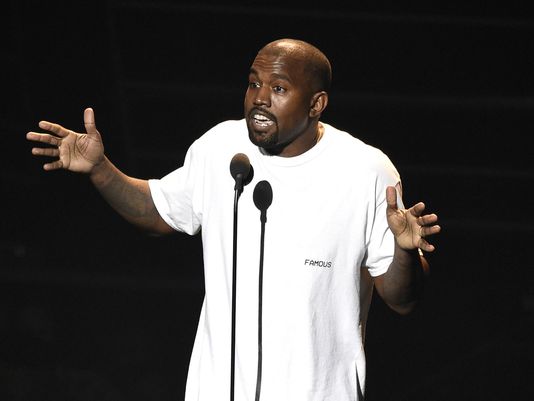
Deconstructing Kanye West


   Kanye West is arguably one the most creative, insightful visionaries of our time. Many would also argue that he is one of the biggest a**holes and the most immature. Whatever we think or feel about him, fifty years from now it would be virtually impossible to discuss Pop Culture during the Millennial generation without mentioning the social commentary, musical and fashion contributions of Kanye West. 

   Since the mid 90's of his Roc-A-Fella Producer days up to the present, West has evolved into somewhat of a Pop Cultural Messianic Figure and people either love him or hate him. Coming from an educational background in Chicago, I could always see a growing social consciousness throughout West's music and that's what resonated with me. It wasn't until September 2nd, 2005 that he took a public stance and vocally expressed it during the live Hurricane Katrina telethon by stating, "George Bush doesn't care about black people" in regards to how the government handled this natural disaster. Although he later clarified his statements, West's often unpredictable social commentary began to take center stage, often to the point of eclipsing his artistic contributions. Since 2004 to the present date West is known for his anti-Award Showism. He's done everything but storm out of, publicly criticize, boycott and even take the microphone from an artist who received an award he felt she didn't deserve. Some shows have strived to accommodate this by giving West a platform to speak and this often comes back to bite them in the a**. He's walked out in the middle of concert performances and stopped performances midstream to share his philosophical views about everything from the music industry, fashion, politics and humanity. He's turned interviews upside down, he's shared his frustrations with the Paparazzi and has even announced his run for Presidency in 2020. On top of that he dated stripper Amber Rose and eventually married and has two children with Kim Kardashian who was catapulted into the limelight because of her sex-tape with Ray J. Most recently West cancelled the rest of his Saint Pablo tour dates before being hospitalized at the UCLA Medical Center for sleep deprivation and exhaustion. Through all of this, and more times than not, West has expressed very lucid thoughts on everything from capitalism, politics, human/civil rights, religion, the music/fashion industry, relationships and etc. Oftentimes his delivery is questionable. The very best interview I've seen was with Zane Lowe for BBC Radio.


"I've been sent here to give y'all my truth even at the risk of my own life, even at the
risk of my own success, my own career. I've been sent here to give y'all the truth."
-Kanye West-

   I think in order to gain a sense of where Kanye West is often coming from it's important for us to consider, and strive to understand, the perspective of a Creative. Although the content and contributions may be different, as a Creative, there is not much of a difference between Michael Jackson, Phyllis Hyman, Dave Chappelle, Nina Simone, Basquiat, Sly Stone, Lauryn Hill, Jimmy Hendrix, Zora Neale Hurston, Richard Pryor, Marvin Gaye and many others. To be a Creative and simultaneously exist within a racist/sexist entertainment industry that seeks to capitalize off of ones intellectual property is very difficult to cope with. Many have literally lost their mind. Others became drug addicts and alcoholics. Some left America while others walked away and became a recluse. Many died here, from a broken heart. 

   Being a Creative requires a person to think differently about life and solve problems in a new way. In order to do this, Creatives face fears, self-doubt and take risks that many people don't. Thought leaders; Creatives are ambassadors of an uncharted territory the world has yet to discover and fully appreciate. They are the subject matter experts of the unknown. To be this kind of person we must be open to inspiration at all times. Inspiration that often defies social norms and conflicts with the status quo. As a painter that may mean working countless hours and through sleepless nights to finally unveiling a social justice painting at a gallery owned by the very people who've fought against it. As an actor that may mean turning down the highest paid role you've ever received and Grammy shoo-in because it conflicts with your core values. As a musician that may putting your career and family security on the line to fight getting out of a record contract. As a fashion designer or model it may mean walking the long hard road of independent slow money instead of selling out your image, and images, to the highest bidder. All of these are life decisions that people often take for granted that Creatives have to make. There are many times I've literally been in my recording studio all night. There are many times I've been stirred out of my sleep in the middle of the night with an idea that I immediately start writing about. Many of these articles and chapters in my books are the result of this process. Being a Creative is like being on call from the universe because inspiration is a round-the-clock devotion to work. Although the beauty of what we manifest is timeless, the backstory, blood, sweat, tears and hours of dedication that often goes into forging such beauty is something many never see. What many also don't see is the stress, frustration and physical/social strain. As I've said, many Creatives have always strived to find various methods to cope with this in a society that tries to quantify, package, sell and often simultaneously marginalize, genius. West is not known for having a history of drug use or alcoholism. Aside from past lovers, he has not been associated with any women except his wife. The question many of us should be asking is how has he coped? I would argue that what we've seen from his off-the cuff interviews, public meltdowns and concert rants is not him simply venting or throwing a tantrum. I would also argue that this medium has become his coping mechanism; a platform he's learned to use as an outlet and form of therapy.

   There's an earthly gift and worldly curse that comes along with being a Creative. On one had you may be gifted to write the most beautiful poetry or paint the most brilliant picture the world has ever seen about love, yet be companionless or experience some of the most tumultuous relationships a person could imagine. Creatives are some of the most complex, sophisticated people to understand and the perimeters of a world always proves to be a societal box not large enough to contain their spirit. To paraphrase what Dave Chappelle once said, it's easy to call someone crazy. It's dismissive. It doesn't require you to examine anything they're saying or what's behind them acting the way they do. Maybe the environment West, and countless other Creatives have been in, is a little sick. If that is even part of our conclusion, we must ask ourselves what can we do to teach them, about healthy ways to disengage or healthy coping skills to thrive? I challenge all of us to not just consider that but strive to actively seek solutions; the mental, physical and socioeconomic health of our growing Millennial and Alpha generation depends upon that. 

Peace,
Saladin